What Is a Torsional Pendulum? A STEM Physics Experiment
What is a Torsional Pendulum
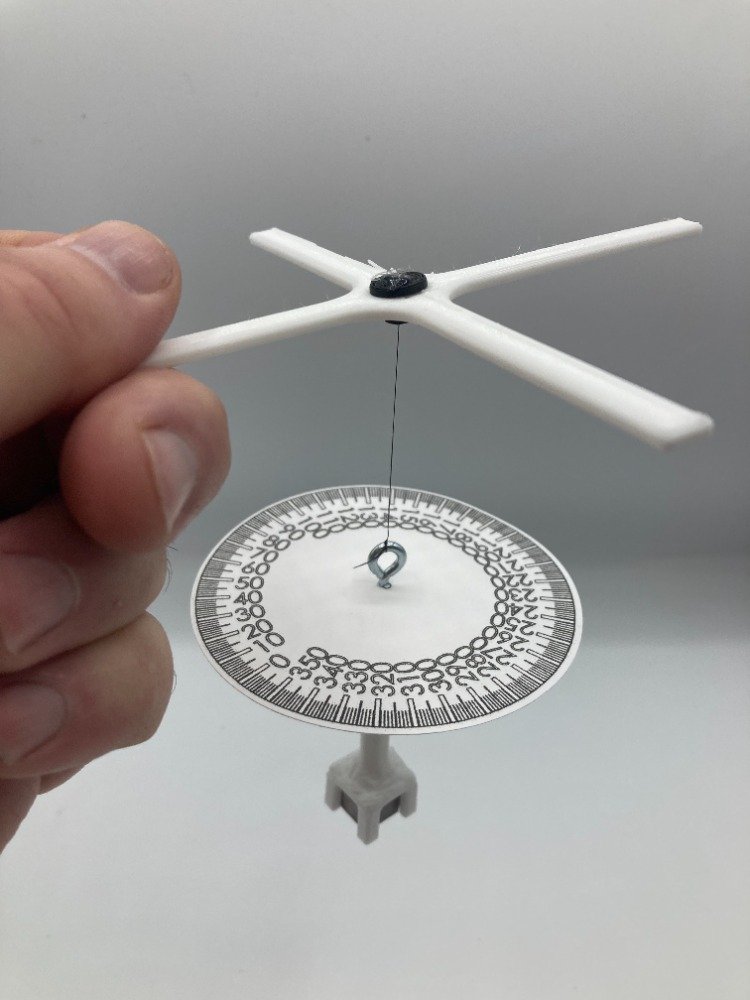
A torsional pendulum is a mechanical oscillator that rotates about an axis. When its supporting string, thread, wire, or rod is twisted, it produces a restoring torque that returns the system toward equilibrium. Unlike a traditional pendulum, it oscillates rotationally rather than swinging side to side.
How It Works
A torsional pendulum consists of three main components:
· A rigid body, such as a shaft, disk, or wheel
· A thin string or thread that suspends the body
· A restoring torque generated as the thread twists
When the body is rotated and released, the thread twists and untwists, producing periodic oscillation. The motion has the same mathematical form as a mass-spring system: torque corresponds to force, and angular displacement corresponds to linear displacement.
Torsional Pendulum Example
Torsional pendulums are used in devices such as torsion clocks and seismometers. A clear example is the Resumpti™ STEM Motion Device, which features a mostly diamagnetic torsional pendulum. Its material composition allows it to rotate within a shared magnetic field. To learn more, follow the link to the Resumpti™ website.